


Spooky Season · Classroom
Halloween Songs for Preschoolers: 15 Not-Scary Circle Time Songs
A hello song, a counting song, two fingerplays, a brain break, a clean-up song, a line-up song and a rest-time lullaby — fifteen original Halloween songs written for three- and four-year-olds, gentle enough for the most cautious child in the circle. Play them from one place, then make one that sings your class's names.
5 free songs with every monthly subscription
Hear real examples
Every track below was generated with this tool — press play, then make yours.
Hear the album
Circle Time Halloween
Not-scary Halloween songs for preschool and kindergarten
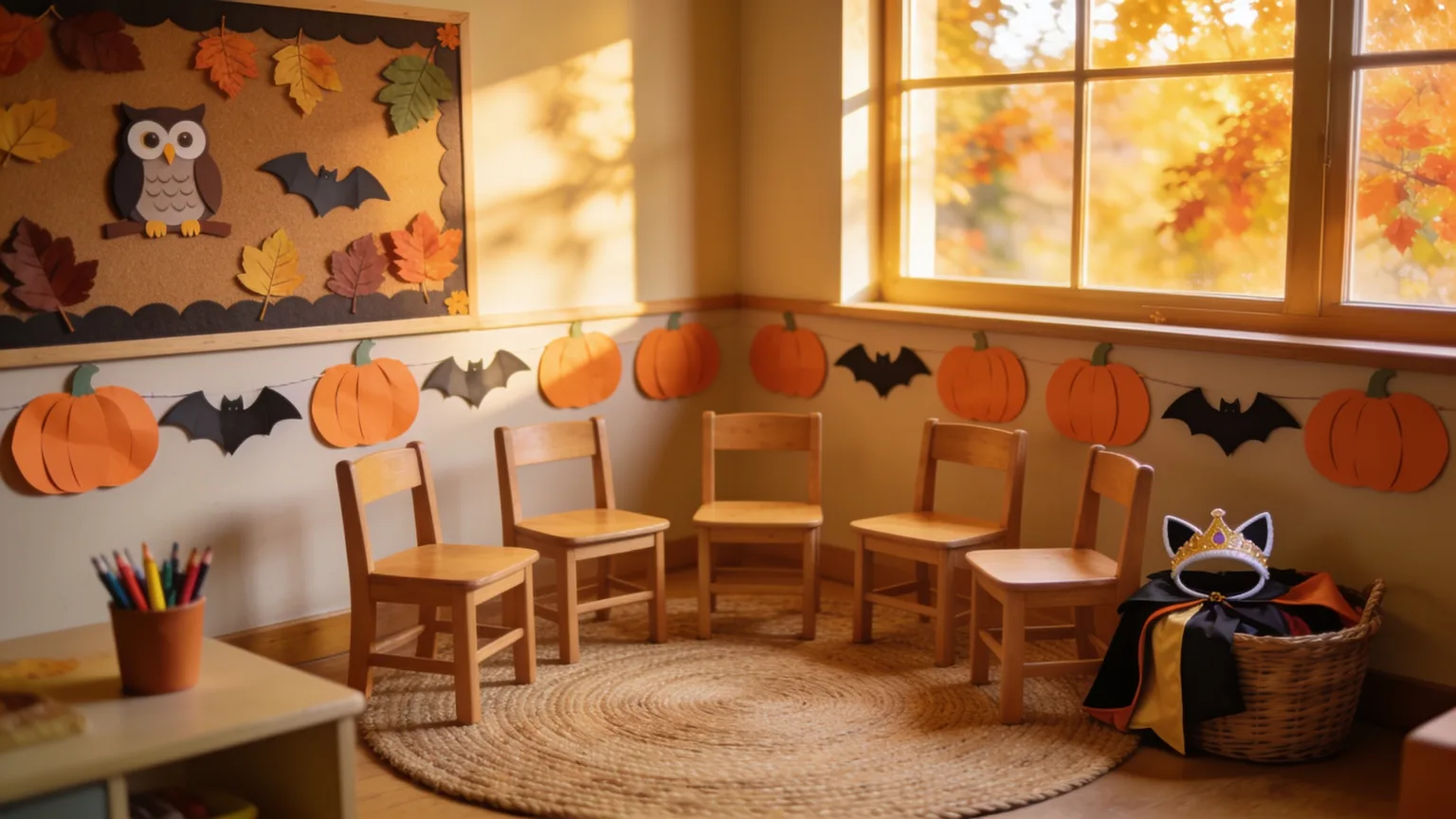
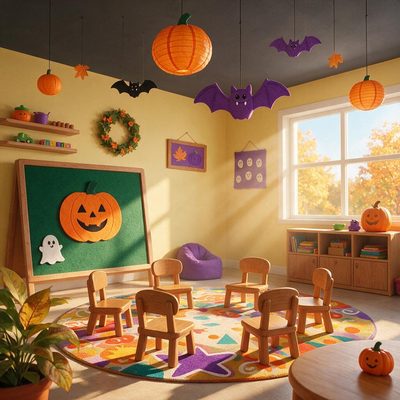
Planning October circle time comes down to one question: how spooky is too spooky for this year's class? A song that delights the four-year-old in the dinosaur costume can be too much for the three-year-old who still checks under the reading tent. The Circle Time Halloween album was written with that child in mind. All fifteen songs are friendly and gentle — bats that hang in a tree and fly home, a spider who tickles your nose, monsters who stomp and spin and then sit back down ready to learn. No frights, no night noises, nothing that follows anyone to their nap mat.
The set covers a whole preschool day, not just the party. There is a hello song for the morning circle, a counting song and two fingerplays for small-group time, a brain break for the wiggly stretch before lunch, a clean-up song and a line-up song for transitions, a colour song, a feelings song, a phonics song for the kindergarten side, a rest-time lullaby and a goodbye song for pick-up. Every one of them is original, finished audio you can play from a classroom speaker or a phone — no hunting for a video, no ads between songs.
When you want a song that knows your room, the composer at /ai-music writes one around your class name, your children's names and your actual routines. Full vocals and production, cover art, a shareable page and an MP3 you keep, ready in one to three minutes. Every monthly subscription includes 5 free songs. After that, songs cost 5 credits each.
Song ideas to start from
How it works
- 1
Describe your song
Type one sentence — the person, the story, the vibe — or start from an example above. Any language works.
- 2
Pick a style and length
Vocals or instrumental, any genre, from a 15-second hook to a full-length track. Or write every lyric yourself in the studio.
- 3
Generate, download, share
Your song renders in minutes with cover art and its own page. Download the MP3 or just send the link.
Choosing by spookiness level — and planning for the families who opt out
Sort your October songs into three shelves before you print the circle-time plan. The gentlest shelf has no Halloween creatures at all, only autumn: "Pumpkin Patch Field Trip", "Orange, Black, Purple, Green" and "Sleepy Owl Rest Time" are pumpkins, colours and a quiet tree, and they work for any classroom in October. The middle shelf has friendly creatures that never do anything frightening: "Count the Bats", "Spider Crawls Up My Arm" and "Hello, Little Pumpkins" (which says hello to a little ghost costume the way it says hello to a firefighter). The top shelf is the silliest the album gets — "Monster Wiggle Break" and "Ghost Fingers Wiggle", where the monsters are funny and the ghosts are your own ten fingers whispering a tiny boo. Nothing on the album goes past that.
Start the month on the gentlest shelf and watch the circle. Children tell you quickly what they can handle, and a class that giggles at the spider is ready for the monster wiggle by the second week. If one child flinches, drop a shelf for a few days; the songs are short and the routines they support (counting, transitions, rest) do not change.
Some families do not celebrate Halloween, and a good October plan includes them without making anyone the odd one out. The gentlest shelf is your answer here too: a pumpkin patch song, a colour song and an owl lullaby are autumn songs, not holiday songs. When you make your own, say "harvest theme, no Halloween words" in the prompt and the composer writes exactly that — the same hello song or clean-up song your class already knows, with leaves and apples where the bats were. Many teachers run the harvest version for the whole room and save the costume songs for parade day.
Circle time, counting and fingerplays
Circle time on a Halloween morning needs an anchor, and "Hello, Little Pumpkins" is built to be one. The chorus is short enough for a three-year-old to sing back after one hearing, and each verse greets a different costume — a cat, a firefighter, a dinosaur, a little ghost — so every child hears something like their own outfit named. Play it while the last few children settle onto the rug and the circle has already started before you say a word.
"Count the Bats" is the counting song: ten bats hang in a tree and fly away one at a time, ten down to zero and back up again, with a real pause after every number so the whole circle can find the right finger. The pauses are the point. Most counting songs race ahead of small hands; this one waits. It pairs naturally with a felt-board tree and ten paper bats a child gets to remove.
The two fingerplays do different jobs. "Ghost Fingers Wiggle" is the calm one: ten fingers are ten little ghosts that hide behind your back, peek out one hand at a time, float high, float low and whisper a tiny boo — slow, whispery, perfect for the moment after a loud activity. "Spider Crawls Up My Arm" is the giggly one: a friendly spider climbs from arm to shoulder to head to nose to tummy, naming body parts as it goes, and it works with toddlers who are not ready for anything more complicated than pointing. Both tell the class exactly what to do with their hands in every line, so you can model rather than explain.
Movement, brain breaks, transitions and clean-up
"Monster Wiggle Break" is the song for the wiggly quarter-hour before lunch. A singer calls the moves like a game — stomp, spin, shake, jump, tiptoe, reach up high, touch your toes — and the last line is always sit back down ready to learn, so the break ends itself. The monsters are funny, never frightening, and the tempo is fast enough that two minutes of it does the job of a run around the playground on a rainy day. "Costume Parade March" is the same energy pointed down the hallway: a steady march beat, a wave for the teachers, a verse each for animals, superheroes, princesses and friendly monsters, and a chorus of march, march, march in our costumes that the whole school hears coming.
Transitions are where October days fall apart, so two of the fifteen songs exist purely to move the class. "Line Up Like Little Bats" is short, calm and repeats twice: wings tucked in, hands at our sides, quiet feet, eyes on the teacher, ready to fly to the next room. Play it the same way every day and the song becomes the instruction — you stop having to say it. "Pumpkin Patch Clean-Up" is three minutes of encouraging energy that tells the class exactly what to pick up (blocks go home, crayons go home, pumpkins on the shelf) and counts down three, two, one, all done; the length of the song becomes the length of clean-up.
Both transition songs are the first ones teachers rebuild with their own rules. If in your room the blocks live in the blue bin and the crayons in the cup, tell the composer that and the clean-up song sings your procedure in your order. Change the routine mid-year and regenerate the song; the music re-teaches the new rule for you.
Rest time, goodbye, and a song with your class's names in it
October rest time needs the opposite of everything above. "Sleepy Owl Rest Time" is a very slow classroom lullaby — felt piano, soft strings, a sleepy owl in a quiet tree, the moon coming up, everyone breathing slowly — and it deliberately leaves out every night noise a nervous child might be listening for. It runs comfortably under the first minutes of nap mats and loops without a jolt. "Jack-o'-Lantern Faces" sits beside it as the gentle feelings song: happy face, silly face, sleepy face, surprised face, and the class makes each one along with the song. There is, on purpose, no frightening face in it. "Goodbye, Little Pumpkins" closes the day the way the hello song opened it: grab your costume bag, hold a teacher's hand, see you tomorrow.
The song families ask about is the one with their child's name in it. Type the class name and the children's first names into the composer — "a hello song for the Ladybug Room that greets Mia, Jonah, Aria and Leo" — and it writes original lyrics that sing each name naturally inside the melody, never spliced in. Ten to fifteen names fit comfortably in a hello or goodbye song; for a bigger class, split the roll call across two verses or use Lyrics mode and write the verses yourself, word for word, with one line describing the sound. Teachers make one for the hello circle, one for parade day with the school's name in the chorus, and one goodbye song for the last day of October that names everyone as they leave.
Whatever you make is finished audio: full vocals and production, cover art, a shareable page you can send to families, and an MP3 that is yours to keep for next year's class too. Instrumentals are available if you want the tune under a puppet show or a craft table without words. Songs run one to three minutes and are ready in about that long. Every monthly subscription includes 5 free songs. After that, songs cost 5 credits each.
Frequently asked questions
Are these Halloween songs safe for toddlers and three-year-olds?
Yes. Every song on the Circle Time Halloween album was written to be gentle: bats fly home, the spider tickles and waves goodbye, the monsters are silly and sit back down, and the rest-time song leaves out night noises on purpose. The two fingerplays and the colour and pumpkin patch songs are the softest starting points for the youngest children. You hear each song in full before the class does.
Can I play these in my daycare or preschool classroom?
Yes — that is what they are for. Play the album from this page, from the album page or from the MP3 on a classroom speaker, tablet or phone. Songs you make yourself download as an MP3 that is yours to keep, so they work without internet during circle time and can go into next year's plan.
Can the song include the names of the children in my class?
Yes. Type the class name and the children's first names into the composer and it writes original lyrics that sing each name inside the melody. Ten to fifteen names fit well in a hello or goodbye song; for a larger class, split the names across two verses or write the roll call yourself in Lyrics mode and it sings your words exactly.
What about families who do not celebrate Halloween?
Use the autumn songs — the pumpkin patch song, the colour song and the sleepy owl rest-time song have no Halloween creatures in them and work for any classroom in October. When you make your own, add "harvest theme, no Halloween words" to the prompt and you get the same hello, clean-up or line-up song with leaves and apples instead of bats, so the whole room can sing it together.
How long are the songs, and how long do they take to make?
Album songs run from a short two-repeat transition song to about three minutes for the clean-up song. Songs you make in the composer are one to three minutes long, with full vocals, production and cover art, and are ready in about one to three minutes. Every monthly subscription includes 5 free songs. After that, songs cost 5 credits each.
Takes about a minute to start. 5 free songs with every subscription.