


AI jingle generator: fast workflow for copyright‑safe jingles, hooks, and short ad music
Replace studio time with an AI jingle generator workflow that creates loopable hooks and short ad music in minutes. Steps, prompts, and GoCrazyAI how‑to.
 AI-generated
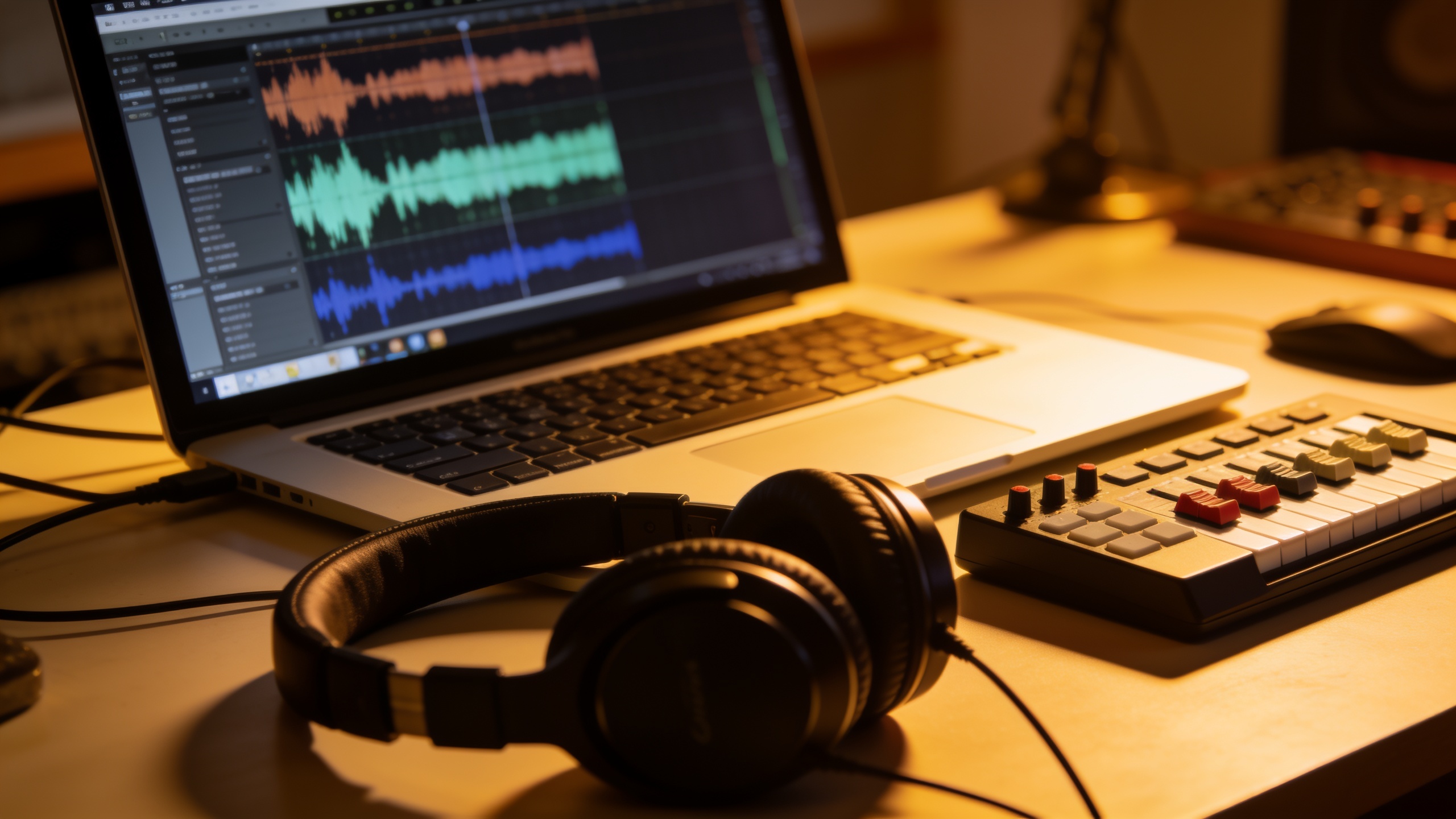
You need a short, copyright‑clear jingle or loopable hook without hiring a composer or buying expensive library licenses. This guide shows a reproducible AI jingle generator workflow that moves from a one‑line brief to a finished 6–30s track in minutes. You’ll get prompt templates, concrete settings, export tips, and a hands‑on GoCrazyAI example so you can produce TikTok jingles, ad hooks, and YouTube intros quickly.
Quick Answer
How do you use an AI jingle generator to make short, copyright‑safe music? Write a tight brief (mood, tempo, instrumentation, length), generate several short versions, pick the strongest hook, edit timing and stems, and export loopable files. With tools like the GoCrazyAI AI Song Generator you can do this in five short steps and export tracks cleared for commercial use.
Why modern creators need fast, copyright‑friendly music for short ads and TikTok jingles?
Short answer: short‑form video dominates attention, so creators need quick, platform‑ready music they can legally use without complex licensing. Statista data shows U.S. users continue to spend a large share of social video time on short formats, which raises demand for 6–30s tracks tailored to each platform (share of time spent on social video).
Expand: Creating custom music in a traditional studio takes time and money, and stock libraries often require licenses that don't match every use. For a 6s TikTok hook or a 15s Instagram ad, you want a track that fits exact duration, tempo, and loudness targets. AI jingle generators allow you to iterate rapidly, produce multiple hooks, and export stems or loopable masters. That speed matters when trends shift daily and ad creative needs to be updated on the fly.
How copyright and commercial‑use rules apply to AI‑generated music (what creators must know)?
Short answer: U.S. copyright protection is limited to works of human authorship, so AI‑only outputs may have registration limits; document your human creative choices when you rely on AI‑assisted music (U.S. Copyright Office).
Expand: The U.S. Copyright Office has issued guidance and continues to review AI topics — if you plan to claim authorship or register a work, include records of prompt drafts, parameter changes, and human edits. Separately, pick AI music platforms that state commercial licensing terms. ElevenLabs’ Eleven Music capability and its marketplace are presented for broad commercial use and provide APIs and licensing options that reduce friction for ads and games (ElevenLabs documentation).
Caveats: Academic and legal analyses flag unresolved issues around training data and similarity to existing works, so best practice is to use vendors that claim licensed training data, change outputs via editing, and run similarity checks if you suspect replication. Keep records of prompts, version history, and final edits as part of your copyright hygiene.
Choosing the right brief: writing prompts that produce a loopable hook, jingle, or short ad music (example prompts)
Short answer: a good brief names mood, tempo, instrumentation, duration, and a concrete use case (e.g., "6s TikTok hook for a coffee brand"), plus production notes like "bright mix" or "punchy kick". That gives the model clear constraints to generate loopable, platform‑ready audio.
Expand: Prompts should be 1–3 concise sentences plus 2–4 bullet constraints. Use explicit lengths (6s, 15s, 30s), BPM, and desired instruments. Below are copy‑ready examples you can paste into an AI jingle generator.
Example prompts:
"Bright, upbeat 6s TikTok hook for a coffee brand. Tempo 110 BPM. Instruments: electric piano, slap bass, tight snare. Hook should loop seamlessly, happy major key, simple 4‑bar phrase."
"Energetic 15s ad music for product demo. Tempo 125 BPM, synth lead, punchy kick, sidechained pad, build at 8–12s, export stems (lead, drums, bass). Modern electronic pop vibe."
"Warm 30s theme for YouTube intro. Tempo 95 BPM, acoustic guitar, warm bass, light percussion, fade‑out loopable 2–4 bar ending for seamless repeat."
How to tweak: If the loop isn’t tight, ask for "seamless loop at 0:00–0:06" or request separate stems so you can align loop points in your editor. For vocal hooks, specify lyrical fragments or phonetic syllables rather than a full sung line if you need a non‑lyrical jingle.
Hands‑on: Generate a TikTok jingle in 5 steps with GoCrazyAI AI Song Generator (/ai-music)?
Short answer: write a tight 6s brief, select style and tempo, generate 3 variants, pick the best hook, tweak prompts or request stems, and export a loopable WAV/MP3 from GoCrazyAI. The platform is powered by ElevenLabs music models and is designed for quick commercial exports.
Expand: Step‑by‑step on GoCrazyAI’s AI Song Generator (/ai-music): start with a brief (use one of the example prompts above), set duration to 6s, select tempo (e.g., 110 BPM) and instrumentation (electric piano + bass + drums), and choose "loopable" or "export stems" if available. Generate three variants and compare hooks by auditioning them at the target loudness and device (phone speaker). Use small edits: adjust the prompt to alter melody contour or change the percussion for punch.
Export practical files: choose a WAV for editing and an MP3 for immediate upload. If you need to polish the timing, export stems so you can nudge the loop edges in a DAW or GoCrazyAI’s editor. Learn about pricing and credits on GoCrazyAI Pricing to estimate runs and exports: GoCrazyAI Pricing.
Hands‑on: Create a loopable theme and export it for YouTube intros and ads?
Short answer: plan a 4‑bar musical idea, generate a 15–30s track with explicit "seamless loop" instructions, export stems, then trim or crossfade the loop point in an editor for a flawless repeat.
Expand: For YouTube intros and ad bumpers you usually want slightly longer material than a TikTok hook. Request a 15–30s track with a clear 4‑bar motif repeated and the instruction "final 2 bars designed to loop back to bar 1". Generate stems for drums, bass, and lead so you can refine mix and loudness for YouTube. When exporting, produce a version with a one‑bar pre‑roll and a looped master without lead‑in clicks.
Technical tips: set DAW project tempo to the generated BPM, align the bar grid, and apply a 10–20ms crossfade at the loop boundary if you hear pops. If you plan multiple loop lengths (6s and 10s), generate both and pick the one that best matches platform ad breaks and YouTube ad standards.
 AI-generated
Best practices to match mood, tempo and instrumentation to platform formats (15–30s ads, 6s loops, and trending sounds)?
Short answer: match length to platform (6s for hooks, 15s for short ads, 30s for branded spots), keep tempo and instrumentation consistent with genre norms, and watch loudness/crest factors for each platform.
Expand: For 6s hooks use simpler instrumentation and a single strong melodic or rhythmic motif. Aim for 90–130 BPM for pop/brand hooks and 60–90 BPM for emotional ads. For 15–30s ads, include a short intro, a clear main section, and an ending designed to either resolve or loop. Keep arrangement sparse in the first 3–6s to let voiceover or captions breathe. Match sound palette to the platform: TikTok trends often favor bright synths and percussive leads; Instagram Reels may use fuller mixes. Normalize masters to recommended loudness targets and test on mobile speakers. Trending sounds are style cues, so mirror instrumentation and rhythm rather than copying melodies.
How to build a repeatable workflow: from prompt → A/B versions → editing → publishing (speed tips for social creators)?
Short answer: standardize your brief template, generate multiple variants per brief, pick winners fast with a checklist, export stems for easy edits, and keep an asset library of loopable hooks and stems to reuse across campaigns.
Expand: A fast workflow example:
1) Use a one‑line brief template (mood, BPM, instruments, length). 2) Generate 3–5 A/B variants in one session. Name files with brief + variant ID. 3) Quick audition checklist: does it loop, does it leave space for VO, does it match loudness? Mark winners. 4) Export stems and a full mix. Trim loop points or apply micro crossfades in your editor. 5) Publish with platform‑specific loudness and export formats.
Speed tips: batch prompts for similar campaigns, keep a tagged library of stems, and use small prompt edits (change one element at a time) to iterate predictably. Integrate audio in GoCrazyAI Media Mixer or your regular editor. If you need to polish mixes quickly, GoCrazyAI’s AI Video Editor (/ai-video-edit) can add the track to your cut and render directly for upload.
What mistakes should you avoid when using AI jingles (common pitfalls)?
Short answer: common mistakes are vague briefs, failing to request stems or loopable exports, ignoring licensing details, overfitting a melody to a trend, and skipping documentation of human edits. Avoid these to prevent wasted runs and legal ambiguity.
Expand with how to avoid each:
- Vague briefs: Don't say "make something catchy." Instead specify BPM, mood, length, and instrumentation.
- Skipping stems: If you only export a stereo master you may not be able to fix timing or mix; request stems up front.
- Ignoring licensing: Always confirm the platform's commercial terms and keep records; prefer services that state commercial use clearance (e.g., ElevenLabs‑powered offerings).
- Copying trending melodies: Mimicking a viral melody too closely risks similarity claims. Ask for "trend‑style" textures rather than copying exact hooks.
- No version control: Keep prompt histories, edits, and exported file versions so you can show human contribution and reproduce results.
Frequently Asked Questions
Can I use AI‑generated jingles in paid ads and monetized videos?
Often yes, if the platform provides commercial licensing. Use tools that explicitly permit commercial use and keep records of prompts and edits. For U.S. registration, document your human creative choices per the Copyright Office guidance (U.S. Copyright Office).
How do I make a 6‑second jingle loop perfectly?
Request a "seamless loop" in the prompt, ask for export stems, align bars in a DAW at the generated BPM, and add a small crossfade (10–20ms) at the loop boundary if needed.
Do AI music models limit track length?
Yes. Many models have minimum/maximum duration controls; ElevenLabs notes structure and duration limits, so plan briefs around typical ad lengths (6s, 15s, 30s) or up to a few minutes for longer pieces (ElevenLabs documentation).
Conclusion
Final thoughts: AI jingle generators let small teams produce short, platform‑ready music fast — if you use clear briefs, keep stems, and document edits. For quick, commercial‑ready hooks and loopable themes, try generating multiple variants and exporting stems so edits are trivial. Pop a vibe into the AI Song Generator and you'll have a track to score the cut in minutes.
Sources
- Copyright and Artificial Intelligence | U.S. Copyright Officecopyright.gov ↗
- Copyright Registration Guidance: Works Containing Material Generated by Artificial Intelligence (Federal Register, March 16, 2023)govinfo.gov ↗
- Eleven Music — ElevenLabs Documentation (Music capabilities and Marketplace)elevenlabs.io ↗
- Introducing Eleven Music — ElevenLabs (YouTube / product launch)youtube.com ↗
- Share of time spent on social video in the U.S. (Statista, data through 2025)statista.com ↗
- Generative AI and Copyright Infringement: A Legal‑Technical Analysis (arXiv, 2026)arxiv.org ↗
- US Copyright Office — Federal Register Notice: Artificial Intelligence and Copyright (Music listening sessions, 2023)thefederalregister.org ↗
- ElevenLabs LinkedIn announcement — Eleven Music API for developerslinkedin.com ↗